


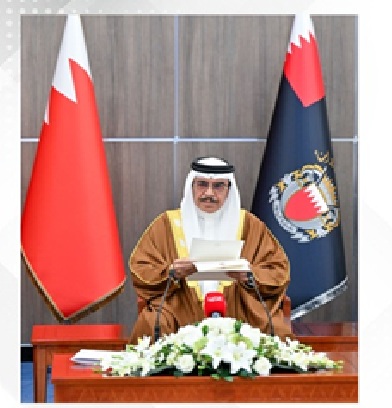
Manama :: General Shaikh Rashid bin Abdullah Al Khalifa, Minister of Interior, met with citizens from across Bahrain as part of the community partnership strategy and efforts to strengthen community engagement.
The Interior Minister said that the leadership approach of His Majesty King Hamad bin Isa Al Khalifa, Supreme Commander of the Armed Forces, has ensured the protection of the Kingdom during the Iranian aggression, as it has laid solid foundations of security and stability that strengthened Bahrain’s national defence and security capabilities. The Minister also highlighted the measures undertaken by the government led by His Royal Highness Prince Salman bin Hamad Al Khalifa, the Crown Prince and Prime Minister, in addressing the repercussions of the Iranian attacks.
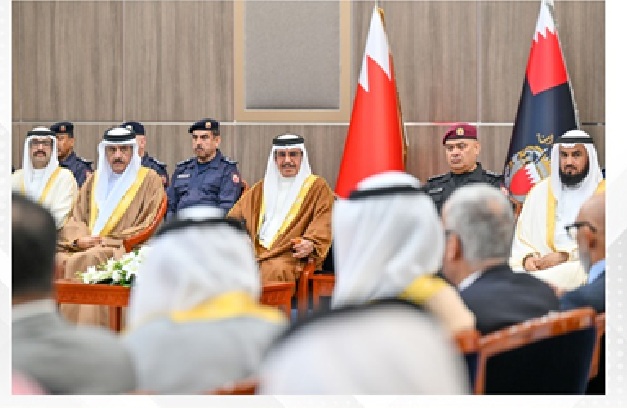
General Shaikh Rashid bin Abdullah said that the meeting came on the background of the Iranian aggression targeting the Kingdom of Bahrain and other Arabian Gulf states, which necessitates a thorough historical analysis of this regime based on the Wilayat al-Faqih (the rule of the religious jurist) doctrine. The Minister said this concept had evolved beyond a religious reference framework into a cross-border political project developed by Khomeini. This doctrine, centred on allegiance to the ruling jurist in Iran, shifts political allegiance away from the state in which individuals reside toward the ruling religious authority in Iran, even where such allegiance conflicted with national interests or threatened the security and stability of their countries. He stressed that no authority supersedes the authority of the civil state in Bahrain.
The minister said Bahrain and other Gulf states had witnessed a shift in Iranian policy following the 1979 revolution. This had led to increased flagrant intervention in the international affairs of Bahrain, that led to the failed coup attempt in 1981 and acts of riots and terrorism during the 1990s. The Minister said that Iran had sought to mobilise proxies within certain Shia circles under sectarian and political pretexts. He explained that the proxies were encouraged to take action against the state, driven by obedience to the supreme jurist. The Minister added that they also intimidated and terrorised those who disagreed with them in religious and political matters, mentioning the late Shaikh Salman Al Madani as an example of victims of those Iranian proxies.
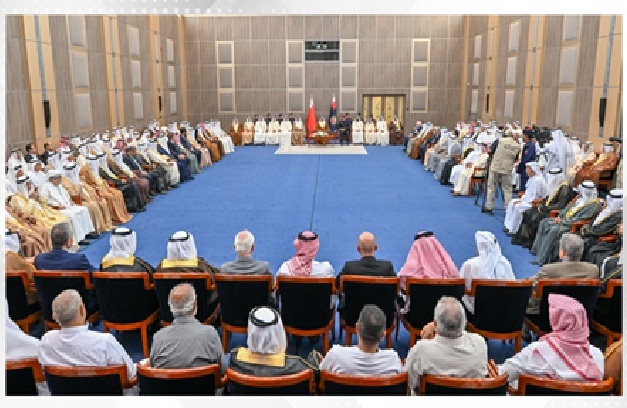
General Shaikh Rashid said the accession of His Majesty the King in 1999 marked the launch of comprehensive reforms based on political reconciliation and openness, and democratic development. The reforms led to a general amnesty granted to individuals convicted in cases related to national security, the return of exiled individuals and granting them the Bahraini nationality, and the launch of constitutional and democratic reforms through the National Action Charter and the Constitution. He said the reforms drove tangible change across various sectors and reinforced the protecting human dignity and expanding civic participation.
The Minister said those reforms disrupted the efforts of Iran and its proxies in Bahrain so it sought to infiltrate the Shia community through the dissolved Islamic Scholars Council as the religious arm and the dissolved Al Wefaq Society as the political arm.
General Shaikh Rashid made a reference to the withdrawal of opposition members from parliament in 2011, describing it as a significant moment. He said some members of the Shiite community chose to participate in the by-elections despite the threats and intimidation the encountered. This, he said, has made Iran realise that its plot is incomplete as there are Shia citizens who reject its attempts of imposing political and religious authority. The Minister thanked those citizens for their loyalty to their nation.
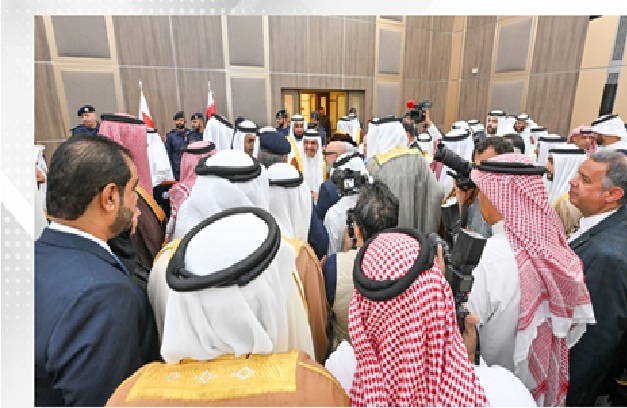
General Shaikh Rashid said the recent developments had revealed what he described as a clear distinction between those committed to Bahrain and those who chose to align themselves with its adversaries. Referring to reactions following the recent Iranian attacks targeting the Kingdom, he said citizens cannot forget the public expressions of joy and support of some individuals who celebrated the attacks.
The Minister indicated that authorities had acted swiftly in dealing with the situation through legal measures that included revoking Bahraini nationality and deporting individuals who betrayed the nation to the country that encouraged them to commit acts of treason.
The Interior Minister said that the authorities had adopted decisive measures against Iran’s proxies in Bahrain, including the main terrorist organisation linked to Wilayat al-Faqih and Iran’s Revolutionary Guard Corps (IRGC).
The minister noted that the group included individuals based in Iran who acted as intermediaries with the IRGC and that it consisted of members of the dissolved Islamic Scholars Council.
General Shaikh Rashid said the developments marked a turning point in Bahrain’s security approach. He said authorities had previously addressed offences within the limits of individual criminal acts and with consideration for broader social sensitivities, but had now moved toward a more comprehensive and decisive approach in dealing with Iran-linked actors in Bahrain. He explained that authorities had adopted decisive measures against Iran’s proxies in Bahrain, including the main group linked to Wilayat al-Faqih and Iran’s Revolutionary Guard Corps (IRGC). The organisation included individuals based in Iran who acted as intermediaries with the IRGC and members of the dissolved Islamic Scholars Council.
It had continued operating for years despite repeated state efforts to address the matter through reform, reconciliation, tolerance, and amnesties. However, the Minister said, this organisation continued its plots to dominate political and religious influence within segments of the Shiite community, intimidate opponents, collect and conceal large sums of money, and finance terrorism-related activities. He said authorities had seized BD600,000 in cash from the residence of one suspect and that funds had also been transferred abroad for terrorist purposes.
The Minister said the organisation infiltrated mosques and maatem (community mourning centres) traditionally administered by well-known Bahraini families who had built them. Some administrators had been intimidated and removed from their positions and certain venues had been transformed into centres for recruitment and ideological mobilisation.
General Shaikh Rashid bin Abdullah said the organisation had exploited social and economic issues, fuelled sectarian tensions, established militias linked to Iran’s Revolutionary Guard, trained individuals in camps abroad, facilitated arms and explosives smuggling operations. This is in addition to infiltrating educational, media, and social media sectors to spread the ideology of Wilayat Al Faqih, conduct disinformation campaigns, and deepen sectarian division within Bahraini society; which the Minister said were crimes against the nation.
The Interior Minister rejected claims circulated on social media alleging that Bahrain’s Shia community was being targeted, stressing that the community represents an integral component of Bahraini society and that the Constitution and laws make no distinction between citizens. He said Bahrain’s Shiite community predated the doctrine of Wilayat Al Faqih and historically had multiple religious figures.
General Shaikh Rashid bin Abdullah emphasised that security efforts would continue against individuals harming the nation and thereby serving parties involved in aggression against Bahrain.
On their part, the attendees affirmed that the people of Bahrain stand united behind the leadership of His Majesty the King and renewed their commitment to preserving security and public order, particularly amid regional challenges.
They described Bahrain’s security and stability as a “red line” that could not be compromised and praised the efforts and sacrifices of security personnel in protecting society and safeguarding national achievements.
