


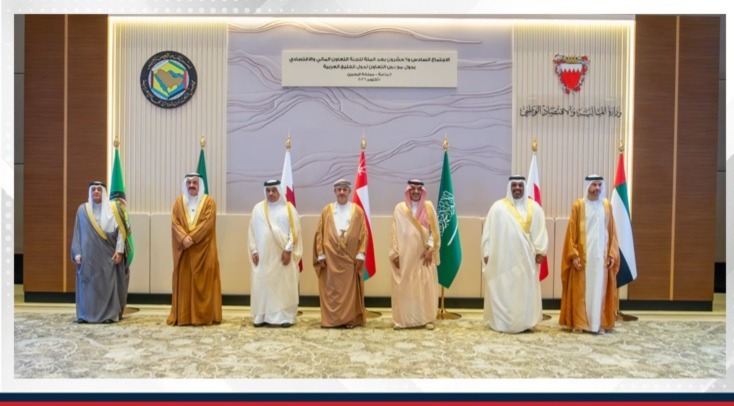
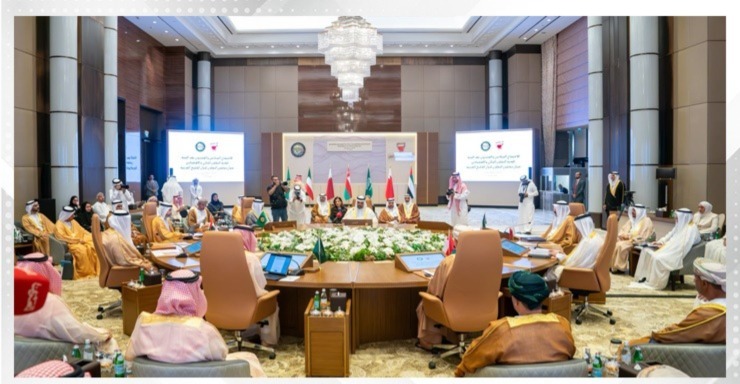
Manama : The Kingdom of Bahrain hosted the 126th Financial and Economic Cooperation Committee meeting. The meeting was chaired by Shaikh Salman bin Khalifa Al Khalifa, Minister of Finance and National Economy, and attended by GCC finance ministers and Jasem Mohamed Al Budaiwi, Secretary General of the GCC.
Shaikh Salman bin Khalifa extended the greetings of His Majesty King Hamad bin Isa Al Khalifa and His Royal Highness Prince Salman bin Hamad Al Khalifa, the Crown Prince and Prime Minister, to the participants, along with their wishes for the meeting’s success. He expressed Bahrain’s pride in hosting the meeting and commended Albudaiwi and the GCC Secretariat for their efforts in preparing for it.
The Finance Minister said the Kingdom, under the leadership of His Majesty the King and the directives of HRH the Crown Prince and Prime Minister, continues to regard joint Gulf action as a strategic necessity, reflecting established regional ties, shared interests and the challenges of the current period. He said the region and the world are undergoing rapid changes and interconnected challenges affecting market stability, energy security, supply chains, trade and investment.
He said the GCC states had demonstrated their ability to respond effectively to changing circumstances following the Iranian attacks on GCC states and their impact on the global economy and the flow of international shipping through the Strait of Hormuz and Bab El Mandeb. He attributed this resilience to the policies adopted by GCC governments, their shared approach, sound economic foundations, and prudent fiscal and monetary policies. These factors, he said, have strengthened the resilience of their economies, maintained confidence in their financial sectors and enabled them to address challenges while continuing their development efforts.
Shaikh Salman bin Khalifa thanked the Kingdom of Saudi Arabia for the logistical facilities it provided, which helped strengthen Gulf economic integration and support the flow of essential goods and supplies. He also thanked the United Arab Emirates for strengthening financial and monetary cooperation with Bahrain, including the signing of a currency swap agreement between the Central Bank of Bahrain and the Central Bank of the UAE. He emphasised that financial and economic cooperation among GCC states is essential to advancing Gulf economic integration.
The Finance Minister stressed the importance of continuing to expand the network of free trade agreements with countries and international groups to boost trade, increase investment flows and create wider opportunities for economic cooperation with partners around the world.
He welcomed the progress made towards concluding technical negotiations on the free trade agreement with the United Kingdom, expressing hope that the necessary steps would be completed for its final signing. He also called for progress on agreements whose technical negotiations have been completed with several countries, as well as continued work on ongoing negotiations, including the resumption of talks with the European Union as soon as possible. This would strengthen the GCC’s position as an active and influential economic partner regionally and internationally.
Shaikh Salman bin Khalifa noted that rapid geopolitical, economic and technological changes around the world, and the resulting challenges to stability, energy security, supply chains and international trade, underline the need to further develop financial coordination and economic integration among GCC states. He emphasised the importance of strengthening the readiness and resilience of national economies and their ability to adapt to change, supporting sustainable growth and the prosperity of GCC peoples.
The Finance Minister also emphasised the need to continue efforts to complete the requirements of the GCC Customs Union and Common Market, describing them as key strategic projects that strengthen Gulf economic integration and support the aspirations of GCC leaders and peoples for greater economic integration and sustainable development.
The meeting’s agenda covered several issues supporting Gulf economic integration, including the outcomes of meetings of GCC central bank governors, the GCC Customs Union Authority, and meetings of heads and directors of tax administrations. It also reviewed developments in the GCC Common Market, measures taken in light of current circumstances, efforts to combat harmful practices in international trade, progress in free trade agreement negotiations between the GCC and other countries and international groups, developments in ratifying the GCC payments-linking system agreement, and the implementation of joint financial and economic decisions.
