


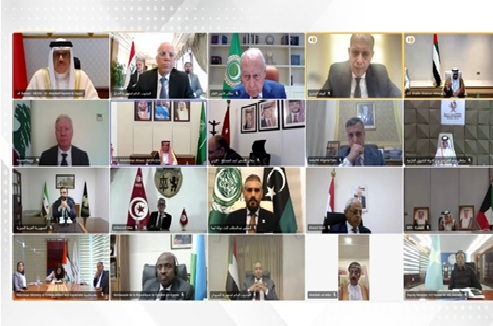
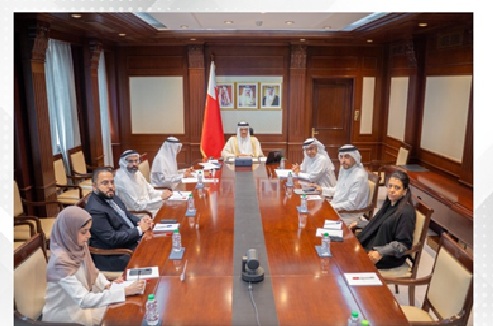
Manama : Dr. Abdullatif bin Rashid Al Zayani, Minister of Foreign Affairs, chaired an extraordinary meeting of the Council of Arab Foreign Ministers, held via videoconference, to address Iran’s attacks against Arab states. The meeting was held as part of the Kingdom of Bahrain’s presidency of the current session of the Council of the League of Arab States at the ministerial level.
The meeting was attended by Arab Foreign Ministers and Ahmed Aboul Gheit, Secretary-General of the League of Arab States.
The Foreign Minister said that Iran’s attacks against Arab states, which were carried out over forty days using thousands of ballistic and cruise missiles, in addition to daily drone strikes, aimed to cause maximum destruction in the shortest possible time. He stressed that these attacks constitute a grave violation of international law and a flagrant disregard for the principles of the United Nations, posing a direct threat to regional and international peace and security and undermining the principles of good neighbourliness.
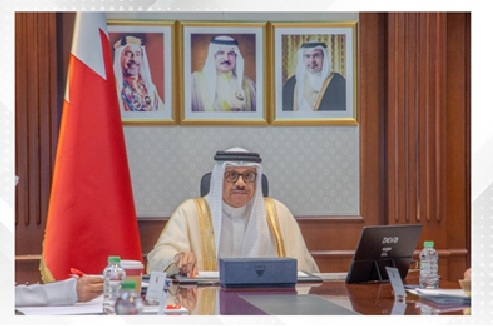
Dr. Al Zayani emphasised that the continued attacks, despite UN Security Council Resolution (2817) of 2026, Human Rights Council Resolution (1/61), and the resolution issued by the International Maritime Organisation in March, each of which condemned the Iranian attacks and called for their immediate cessation, including the Human Rights Council resolution supported by 116 countries calling for compensation for damages, require a firm collective stance to ensure Iran’s full compliance with these decisions.
He underscored the need to address the severe harm inflicted on civilians and critical infrastructure, including economic and service facilities, noting that such actions constitute a clear violation of international humanitarian law and require effective measures to ensure accountability and full reparation in accordance with international responsibility.
The Foreign Minister also said that Iran must be held accountable for the damage caused by its closure of the Strait of Hormuz to international navigation, which disrupted maritime traffic in the Arabian Gulf, undermined energy security, and affected the supply of food and medicine, international trade, and the global economy. He noted that these actions endangered the lives of thousands of seafarers and contributed to worsening humanitarian conditions worldwide, in blatant violation of international law and the UN Convention on the Law of the Sea.
Dr. Al Zayani reiterated the Kingdom of Bahrain’s strongest condemnation of Iran’s attacks and actions, stressing the need for Iran to uphold its international obligations and fully adhere to the principles of international law, including respect for state sovereignty, refraining from the use or threat of force, and the peaceful settlement of disputes. He also strongly condemned armed attacks carried out by Iran-aligned factions in the region, which violate the sovereignty of Arab states and the UN Charter, calling on the Government of the Republic of Iraq to take practical measures to cut off military and financial support for these factions and deter them from threatening the security and safety of Arab states.
He affirmed Bahrain’s full support for the right of the affected Arab states to self-defence, individually or collectively, in accordance with Article (51) of the UN Charter and international law. He emphasised the importance of documenting all violations and presenting them to relevant international bodies, including the Security Council and the General Assembly, to strengthen accountability and prevent impunity.
The Council adopted the resolution submitted by Bahrain, which strongly condemned Iran’s missile and drone attacks targeting the territories of the Hashemite Kingdom of Jordan, the United Arab Emirates, the Kingdom of Bahrain, the Kingdom of Saudi Arabia, the Sultanate of Oman, the State of Qatar, the State of Kuwait, and the Republic of Iraq. The resolution affirmed that these deliberate attacks constitute a serious violation of the sovereignty of these states, undermine regional peace and security, and represent a flagrant breach of international law, including international humanitarian law and the UN Charter.
The resolution stressed that Iran has failed to comply with the binding request contained in Security Council Resolution (2817) of 2026 to immediately halt its attacks, and that its continued deliberate targeting of civilians and civilian objects constitutes a violation of international law. It affirmed that Iran bears full international responsibility for these attacks and is obligated under international law to provide full reparation for all resulting damages and losses, including, where applicable, restitution, compensation, and satisfaction.
The resolution reaffirmed Arab states’ support for the right of the affected states to pursue action through international and regional institutions to obtain decisions condemning the attacks and holding Iran accountable. It called for the consideration of appropriate mechanisms, in coordination with affected states, to document violations, assess damages and losses, and pursue reparation through diplomatic, legal, and other peaceful means.
The resolution also condemned Iran’s actions and threats aimed at closing the Strait of Hormuz and Bab Al Mandab, considering them a violation of international law and the principle of freedom of navigation in international straits. It stressed that any attempt to obstruct lawful passage constitutes a threat to the security of maritime routes and international energy security, and affirmed the right of Arab states to defend their vessels in accordance with international law. It further affirmed that any obstruction of navigation constitutes an internationally wrongful act for which Iran bears responsibility and must provide full reparation for resulting damages, injuries, and economic losses.
The resolution emphasised that such actions jeopardise the stability of the Arabian Gulf and its vital role in the global economy and energy supplies, as well as international peace and security. It also reiterated the rejection and condemnation of Iran’s continued financing, arming, and mobilisation of affiliated militias in several Arab states, which poses a serious threat to the security and stability of the region.
The resolution called on the UN Security Council to uphold its responsibility to maintain regional and international peace and security, ensure accountability for attacks targeting civilian facilities and infrastructure, and work towards the full implementation of Resolution (2817), including demanding Iran’s immediate cessation of all attacks against Arab states and its compliance with its international obligations.
The resolution reaffirmed the inherent right of affected Arab states to self-defence under Article (51) of the UN Charter and to take all necessary measures to protect their sovereignty, security, and stability, while emphasising that the resolution does not prejudice any rights or remedies available under international law. The Council tasked Arab groups in international organisations, Arab councils of ambassadors, and Arab missions to the UN and other forums to take urgent and coordinated action to convey the content of the resolution to relevant capitals and international and regional organisations.
