


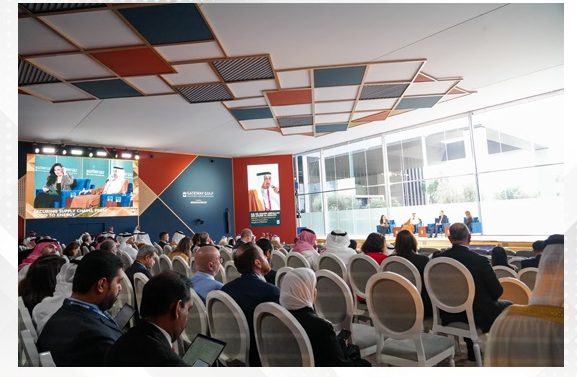
Manama : Dr. Shaikh Abdulla bin Ahmed Al Khalifa, Minister of Transportation and Telecommunications, took part in a panel discussion entitled “Securing Supply Chains: From Food to Energy”, held as part of Gateway Gulf 2026 at the Four Seasons Hotel Bahrain Bay.
The Minister affirmed that supply chain security has evolved into a broader concept centred on building resilient and diversified systems capable of responding swiftly to changing circumstances. This requires diversifying sources of supply and transport routes, enhancing infrastructure reliability and expanding networks of partners to ensure the continued flow of goods and services under all conditions.
He highlighted the importance of regional connectivity in strengthening economic security and supply chain resilience, pointing to the need for integration across land, sea and air transport networks, ports and airports. He also emphasised the importance of developing road and rail links among the Gulf Cooperation Council (GCC) countries and improving mechanisms for exchanging data and information on the movement of supplies. Greater regional integration, he said, would enhance the ability of countries in the region to maintain the smooth flow of trade.
The Minister also underscored the growing role of technology, telecommunications and digitalisation in developing transport and logistics systems. Real-time data, artificial intelligence and advanced analytics, he noted, have become essential tools for monitoring the movement of goods. He added that Bahrain’s strategic location at the heart of the Gulf, together with the integration of its ports, aviation, transport and telecommunications sectors, provides an important foundation for supporting trade and enhancing the efficiency and resilience of regional supply chains.
The panel also featured Nicolas Poirier, Chief Executive Officer for Africa, the Middle East, South and Central Asia at Air Liquide, and Henadi Al-Saleh, Chief Executive Officer and Board Member of Agility. It was moderated by Sally Mousa, Senior Presenter at Forbes Middle East.
The discussion examined the changes in global trade routes and supply chains in recent years and their implications for food and energy security. It also explored ways to strengthen supply chain resilience through diversifying sources of supply, investing in domestic production and clean energy, and enhancing cooperation between the public and private sectors.
The panel further discussed the importance of international partnerships, GCC integration, and investment in infrastructure, logistics services and digital technologies to build more efficient and sustainable supply systems capable of responding to future developments.
