


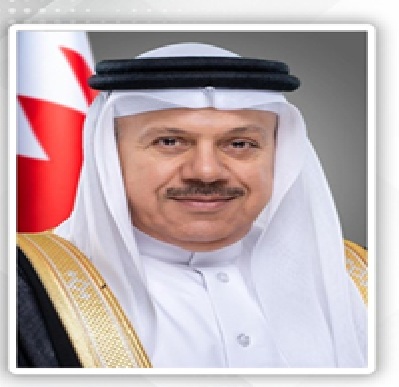
Manama : Abdullatif bin Rashid Al Zayani, Minister of Foreign Affairs and Chairman of the National Human Rights Committee, said that promoting the values of human conscience and a culture of peace represents a firmly established approach in Bahrain’s diplomacy, under the leadership of His Majesty King Hamad bin Isa Al Khalifa and the directives of His Royal Highness Prince Salman bin Hamad Al Khalifa, the Crown Prince and Prime Minister.
The Minister expressed appreciation for the United Nations’ observance of the International Day of Conscience, marked annually on April 5, following an initiative by the Kingdom of Bahrain. He noted that the occasion reflects growing national and international awareness of the importance of human conscience in promoting tolerance and dialogue, rejecting division and hatred, addressing the root causes of conflicts through dialogue and negotiation, and strengthening human solidarity to support sustainable development and peaceful coexistence.
The Minister stressed the importance of prioritising human conscience in efforts to enhance regional security and stability and to address escalating crises and tensions, foremost among them ending the Iranian attacks targeting the Kingdom of Bahrain, Gulf Cooperation Council (GCC) countries, and the Hashemite Kingdom of Jordan, in line with United Nations Security Council Resolution 2817, supported by 136 countries, and the Human Rights Council resolution adopted unanimously with the support of 115 countries. He noted that these resolutions reflect broad international response to Bahrain’s diplomatic efforts and include clear condemnation of Iranian violations of international law, international humanitarian law, and the principles of good neighbourliness.
The Minister reiterated the call for Iran to comply with international charters and the principles of good neighbourliness by immediately ceasing attacks on neighbouring countries, civilians, and vital infrastructure, ensuring the safety and freedom of maritime navigation in the Strait of Hormuz and other vital waterways, protecting global energy supplies and trade, refraining from supporting proxies and militias, and cooperating to rid the region of nuclear weapons and weapons of mass destruction, while directing resources towards sustainable development and regional stability.
He also emphasised the Kingdom of Bahrain’s commitment to continuing its diplomatic role through its presidency of the United Nations Security Council this month, within the framework of its non-permanent membership for the 2026–2027 term, its rotating presidency of the GCC, and its representation of Arab states. He highlighted Bahrain’s efforts to promote peaceful dispute resolution and its firm position on the Palestinian cause in accordance with international legitimacy resolutions, including support for efforts to end the war in the Gaza Strip, achieve recovery and reconstruction, and advance a just and comprehensive peace in the Middle East.
The Minister noted Bahrain’s support for diplomatic efforts aimed at achieving comprehensive and sustainable peaceful solutions to conflicts, combating extremism and terrorism, reducing escalation, and prioritising the protection of civilians, as well as strengthening humanitarian response, including the provision of health, education, and relief services.
On this occasion, the Minister expressed appreciation to the Ministry of Foreign Affairs personnel and Bahrain’s diplomatic and consular missions abroad for their efforts and commitment to representing the Kingdom and promoting its positions at national, regional, and international levels.
