


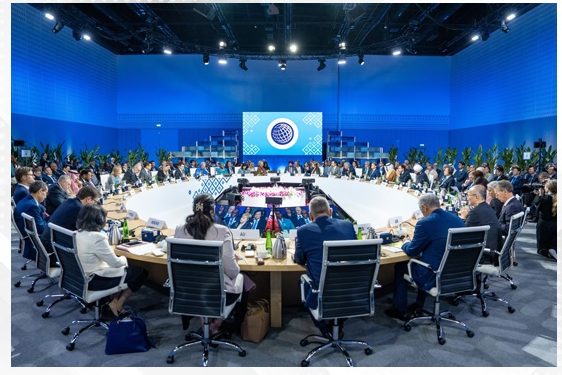
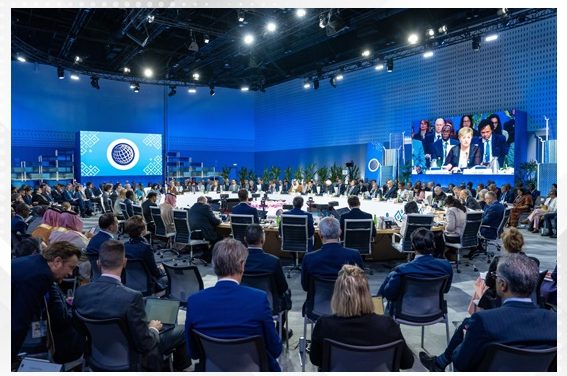
Bangkok : Shaikh Salman bin Khalifa Al Khalifa, Minister of Finance and National Economy, delivered a statement on behalf of the Arab Group and the Maldives, represented by the Kingdom of Bahrain, at the 114th meeting of the World Bank’s Development Committee Plenary, held during the World Bank and International Monetary Fund Annual Meetings in Bangkok, the Kingdom of Thailand.
Shaikh Salman bin Khalifa said conflicts and geopolitical tensions were disrupting global trade routes. Insecurity around the Strait of Hormuz and Bab el Mandeb had led to higher global transport costs, shipping delays and slower global growth. Despite these challenges, he said, the countries remained committed to promoting stability, recovery, resilience and adaptability, sending a message of determination and international partnership.
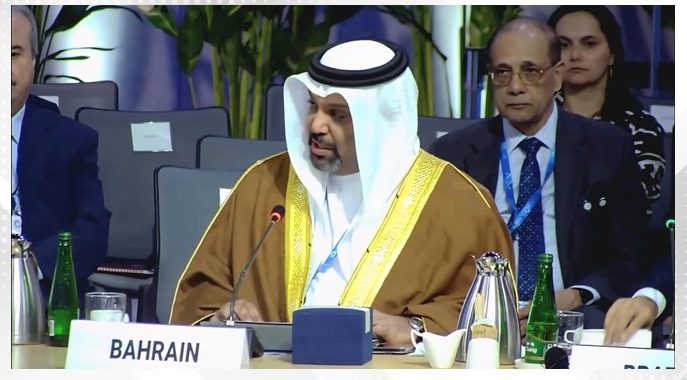
He highlighted that, for decades, resilience had been associated with building safety margins, such as capital, reserves and stockpiles. While these remained important, they were only part of a resilient system. Sustainable resilience should be built into every aspect of the economic system.
The Finance Minister noted that continued economic diversification, stronger public finance and financial sector regulatory frameworks, secure energy supplies and supply chains, and investment in citizens would strengthen resilience and make it an integral part of the design of national systems.
He added that job creation was fundamental to stability and shared prosperity. Providing quality jobs amid major technological shifts would be a complex challenge for many countries. He urged the World Bank to help countries not only prepare to adopt artificial intelligence, but also take part in its development and compete in a global economy driven by AI. This would strengthen resilience and make human capital adaptability an integral part of national systems.
Shaikh Salman bin Khalifa also highlighted the role of regional cooperation in boosting productivity and supply chain security. He noted that the World Bank Group should support and finance the development of cross-border logistics and transport infrastructure needed globally. This would strengthen the resilience of countries’ supply chains and make adaptability an integral part of their design.
He added that increasing private capital flows and directing them effectively remained crucial. The challenge was not a lack of capital, but linking it efficiently to opportunities while assessing risks realistically. He encouraged the World Bank Group to expand blended finance solutions to help countries attract more private investment, strengthen the resilience of capital allocation and build adaptability into their financing mechanisms.
The Finance Minister said the World Bank brought countries together around one table. He called for the opportunity to be used to renew their commitment to working together to build a stronger global development agenda, strengthen its resilience and make adaptability an integral part of its design.
