


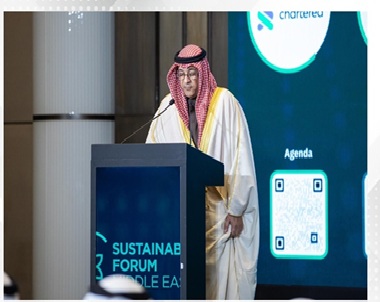
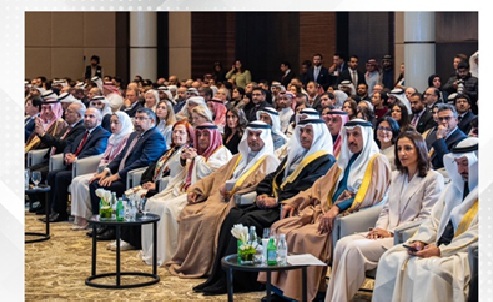
Manama : The fourth edition of the Sustainability Forum Middle East launched today under the theme “Advancing Alignment, Innovation, and Implementation for Energy and Climate Transformation”. The event brought together over 500 participants, including ministers, senior officials, business leaders, and experts from across the region and globally.
The event was attended by Dr. Mohammed bin Mubarak Bin Dainah, Minister of Oil and Environment and Special Envoy for Climate Affairs; Dr. Shaikh Abdulla bin Ahmed Al Khalifa, Minister of Transportation and Telecommunications; Yasser bin Ibrahim Humaidan, Minister of Electricity and Water Affairs; Noor bint Ali Alkhulaif, Minister of Sustainable Development and CEO of the Bahrain Economic Development Board; Fatima bint Jaffar Al Sairafi, Minister of Tourism; and Abdulla bin Adel Fakhro, Minister of Industry and Commerce.
The forum aims to advance climate action and economic resilience through high-level dialogues focused on energy transition, investment alignment, and long-term competitiveness, alongside the signing of memorandums of understanding and partnerships that underscore its practical, implementation-oriented approach.
Dr. Bin Dainah highlighted that Bahrain’s hosting of this regional and international forum reflects its steadfast commitment to supporting climate action and sustainability, achieving a balanced transition in the energy and environmental sectors, and converting climate ambitions into practical initiatives with economic and environmental impact. He emphasised that the Kingdom continues to adopt a balanced approach that integrates environmental sustainability with economic development, strengthening competitiveness, supporting sustainable growth, and building a resilient future for coming generations.
Jassim Mohammed Al Budaiwi, Secretary General of the GCC, addressed the importance of climate action across member states, while Amna Hamad Al Rumaihi, CEO of the Supreme Council for Environment, focused on integrating sustainability into national development.
Dr. Mahmoud Mohieldin, United Nations Special Envoy on Financing the 2030 Agenda, discussed innovative financing for decarbonization and inclusive growth, highlighting the critical role of practical solutions to achieve global climate objectives.
The first day featured a high-level session titled “National Vision Panel: Sustainability Strategies for Competitiveness and Growth”, exploring how sustainability can strengthen the national economy, attract investments, and create jobs. Discussions throughout the day involved more than 50 experts from government, finance, business, and industry, covering topics such as transformation-aligned business strategies, climate diplomacy, carbon markets, biodiversity, emerging technologies, AI-energy integration, regulatory frameworks, and capacity building for effective implementation.
The day concluded with the signing of multiple memorandums of understanding, partnerships, and initiatives, translating the forum’s discussions into tangible outcomes. These agreements reflected the forum’s role as a practical platform for dialogue and action, transforming shared ambitions into concrete commitments, partnerships, and implementation, further solidifying its position as a key driver of sustainability and climate action in the region.
