


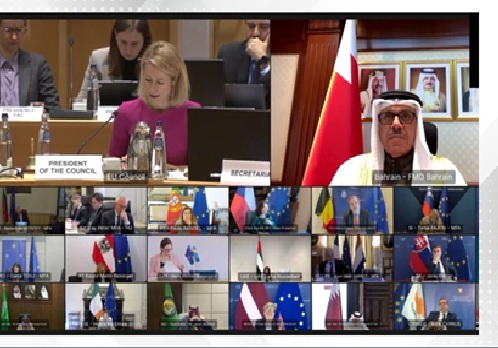
Manama : The Foreign Ministers of the Gulf Cooperation Council (GCC) member states and the European Union held an emergency meeting today via videoconference to discuss the Iranian attacks targeting GCC countries and the latest developments in the Middle East. The GCC side was chaired by Dr. Abdullatif bin Rashid Al Zayani, Minister of Foreign Affairs and current chair of the Ministerial Council of the GCC.
The European side was chaired by Kaja Kallas, High Representative of the European Union for Foreign Affairs and Security Policy and Vice President of the European Commission. The meeting was also attended by Jasem Mohamed AlBudaiwi, Secretary General of the GCC.
The Minister of Foreign Affairs delivered remarks in which he expressed appreciation for the solidarity shown by the European Union and many partners around the world with GCC countries in confronting the unjustified and condemned attacks they have faced. He said this solidarity reflects the strength of the partnership between the two sides and underscores the international community’s recognition of the pivotal role played by the GCC in maintaining regional stability and supporting the global economy.
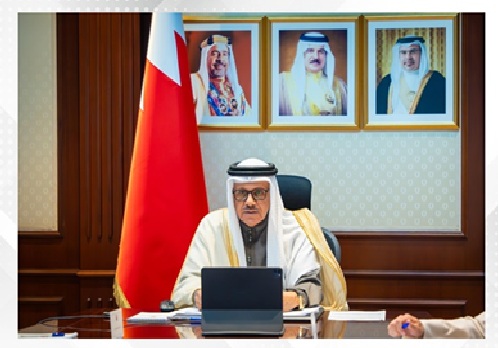
The Minister noted that the meeting comes amid of the most dangerous and difficult circumstances facing the region, as GCC countries continue to face ongoing and unjustified attacks by Iran. The attacks, he said, have targeted civilian infrastructure with more than one thousand drones and hundreds of ballistic missiles, striking homes, hotels, shopping centres, ports, airports, and energy facilities, resulting in casualties, injuries, and significant material damage. He commended the armed forces of GCC countries for responding to the attacks with high efficiency and readiness.
He added that the indiscriminate attacks against civilian property constitute a grave violation of international law, and that GCC countries categorically reject any justification put forward to defend them. He said the attacks represent blatant attempts to terrorise civilians and spread chaos, and are consistent with Iran’s long record of exporting terrorism at both regional and international levels.
The Minister also called for rejecting any attempt by Iran to disrupt international navigation or shut down the Strait of Hormuz, warning that such actions would have severe consequences for global energy security and international trade.
He stressed that the current moment is not merely a time to call for “de-escalation,” but rather a time for Iran to halt completely and permanently its unjustified and indiscriminate attacks on its neighbours and to recognise the need to act as a responsible regional actor committed to international law, the Charter of the United Nations, and its international obligations without preconditions.
The Minister emphasised that GCC countries reserve the right to confront this flagrant aggression and to take all necessary measures to safeguard their security and stability, as well as the safety of their territories, citizens, and residents. This includes the right to individual and collective self defence in accordance with Article 51 of the United Nations Charter.
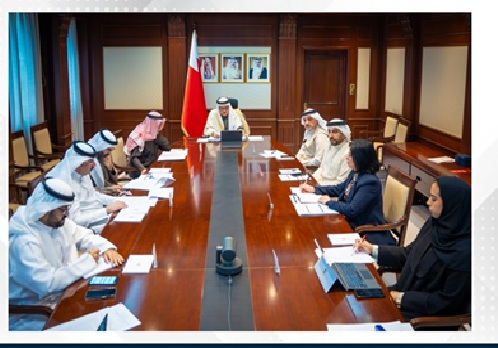
He emphasised that the GCC and the European Union share a commitment to achieving peace and security in the region and to upholding the principles of international law. He added that partners must clearly assert their support for these principles, and that the people of the GCC expect to see a firm European position condemning the unjustified Iranian aggression, demonstrating solidarity with the targeted states, and calling for the immediate cessation of these attacks.
The following statement was issued following the meeting:
Joint Statement
GCC-EU Ministers’ Meeting
On Recent Developments in the Middle East: Iran’s Attacks Against GCC States
1. The Foreign Ministers of the Gulf Cooperation Council and the European Union held an extraordinary meeting on 5 March 2026 to discuss the escalation in the Middle East and Iran’s inexcusable attacks against the GCC countries.
2. The GCC side was headed by His Excellency Dr. Abdullatif bin Rashid Al Zayani, Minister of Foreign Affairs of the Kingdom of Bahrain and Chairman of the current session of the GCC Ministerial Council. His Excellency Jassim Mohammed Al-Budaiwi, Secretary-General of the GCC and the Foreign Ministers of the GCC Member Countries. The European side was headed by Her Excellency Kaja Kallas, High Representative of the European Union for Foreign Affairs and Security Policy and Vice-President of the European Commission, with the participation of Her Excellency Dubravka Šuica and the Foreign Ministers of EU Member States.
3. The Ministers underscored the significance of the strategic partnership between the EU and the GCC, established under the 1988 Cooperation Agreement and re-confirmed with the EU-GCC Brussels Summit in October 2024.
4. The Ministers strongly condemned the unjustifiable Iranian attacks against the GCC countries which threaten regional and global security and called on Iran to cease immediately its attacks.
5. The European Union reaffirmed its solidarity with the countries of the GCC.
6. The Ministers reiterated their commitment to regional stability and called for protection of civilians and full respect of international law, international humanitarian law and the obligation to abide by the principles of the United Nations Charter.
7. The Ministers recalled that they consistently urged Iran to curb its nuclear programme and ballistic missile programme, refrain from destabilising activities in the region and in Europe, and to cease the appalling violence against its own people.
8. The Ministers discussed the significant damage caused by the recent indiscriminate Iranian attacks against the GCC member states, which targeted civilian infrastructure, including oil facilities, service facilities and residential areas, resulting in material damage and threatening the security, safety and lives of civilians.
9. The Ministers highlighted the extensive diplomatic efforts by the EU and its Member States and the GCC member states prior to the attacks, as well the latter’s commitment that their territories would not be used to launch attacks against Iran.
10. The Ministers reaffirmed their unwavering commitment to dialogue and diplomacy as means to resolve the crisis, commending the constructive role of Oman in this regard, and highlighted the need to restore regional stability and security.
11. The Ministers recalled the inherent right of the GCC countries, in accordance with Article 51 of the UN Charter, to defend themselves, individually and collectively, against the armed attacks of Iran. They affirmed that the GCC states have the right to take all necessary measures to defend their security and stability and protect their territories, citizens and residents in order to restore international peace and security. The Ministers recalled the responsibility of the UN Security Council in restoring and maintaining international peace and security.
12. The Ministers agreed to joint diplomatic efforts to bring about a lasting solution to prevent Iran from acquiring a nuclear weapon, to cease production and proliferation of ballistic missiles, unmanned aerial vehicles and any technologies that threaten the security of the region and beyond, as well as to refrain from destabilising activities in the region and in Europe, and ultimately allow the Iranian people to determine their future.
13. The Ministers reaffirmed the importance of safeguarding regional air space, maritime routes, and freedom of navigation, including in the Strait of Hormuz and Bab-el-Mandeb, as well as the safety and security of supply chains and the stability of global energy markets.
14. The Ministers stressed that the security and stability of the Gulf region are fundamental pillars of the stability of the global economy, intrinsically linked to European and global security.
15. In that context, the Ministers recognised the importance of EU maritime defensive operation ASPIDES and operation ATALANTA to protect critical waterways and reduce disruption to supply chains, and encouraged coordination for the support of the operations. The Ministers also stressed the need to safeguard regional airspace and maritime routes, as well as energy security and nuclear safety.
16. The European Union thanked the GCC member states for the hospitality and assistance provided to nationals from the EU on their soil. The European Union and its Member States will continue to make every effort to allow for the safe departure of their citizens in close cooperation with the GCC member states.
