


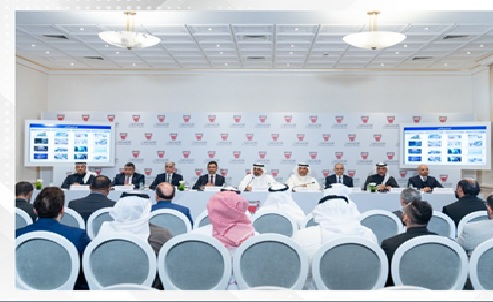
Manama : In a press conference held at Gudaibiya Palace, the Government today announced a package of Cabinet-approved measures to curb government spending, raise new revenues and protect key subsidies for citizens, following a Cabinet meeting chaired by Crown Prince and Prime Minister Prince Salman bin Hamad Al Khalifa.
Central to the announcement, the Cabinet confirmed that electricity and water prices will remain unchanged for the first and second tariff bands for citizens’ main homes, including extended families. Plans to redesign household utility support were put on hold for further study, while price changes for other user categories will take effect from January 2026.
The measures build on progress under Bahrain’s Fiscal Balance Program, under which non-oil revenues more than doubled between 2018 and 2024 while recurring government spending was reduced, supporting steady economic expansion. Over the past two decades, gross domestic product increased fivefold from around USD 9 billion to USD 47 billion, average wages for Bahraini workers more than doubled, and inflation remained comparatively low relative to major advanced economies.
The measures align with Bahrain’s Economic Vision 2030, supporting expenditure discipline, revenue diversification beyond hydrocarbons and long-term fiscal sustainability, while protecting households from cost-of-living pressures.
Building on this progress, key measures announced today include:
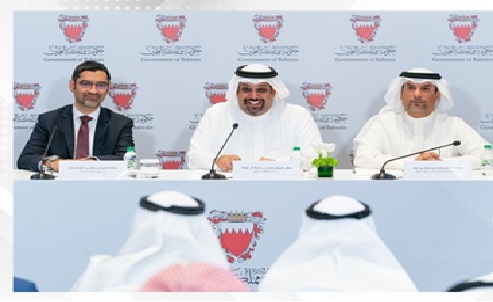
1. Reducing administrative expenses by 20% across all government entities while maintaining the quality of services provided to Bahraini citizens. The Cabinet tasked the Minister of Finance and National Economy with taking the necessary measures.
2. Increase the contributions of government-owned companies to the Kingdom’s general budget.
3. Referring a draft law to the Legislative Branch to impose 10% tax on the profits of local companies whose annual revenues exceed BHD 1 million or net annual profits exceed BHD 200,000, based on agreements with the Legislative Branch. The tax will be applied on any amount following the BHD 200,000 bench mark. The move aims to promote the diversification of income sources, with the objective of implementing the draft law in 2027, and tasking the Minister of Finance and National Economy to take the necessary measures.
4. Referring a draft law to the Legislative Branch to increase selective levy on soft drinks, based on coordination with the Legislative Branch. The Cabinet tasked the Minister of Finance and National Economy with taking the necessary measures.
5. Measures to enhance the utilisation of undeveloped investment lands with existing infrastructure services, through the introduction of a monthly fee of 100 fils per square metre, with the aim of implementation in January 2027. The Cabinet tasked the Minister of Municipalities Affairs and Agriculture with taking the necessary measures.
6. The introduction of fees for sewage services, excluding citizens’ primary residences, calculated at 20% of water consumption charges, with the aim of implementation in January 2026. The Cabinet tasked the Minister of Works with taking the necessary measures.
7. A review of worker permit and healthcare fees. The revised fees will be implemented gradually over a four-year period starting in January 2026, with domestic workers exempted. In this regard, the Cabinet tasked the Minister of Labour, the Minister of Legal Affairs, and the Minister of Health with taking the necessary measures.
8. The adjustment of natural gas prices for companies and factories to reflect the actual cost of consumption, to be implemented gradually over four years starting in January 2026. The Cabinet tasked the Minister of Oil and Environment with taking the necessary measures in this regard.
9. The development of a mechanism for determining fuel prices. The Cabinet tasked the Minister of Oil and Environment with taking the necessary measures in this regard.
10. The Cabinet confirmed that electricity and water tariffs for the first and second tariff bands for citizens’ primary residences will remain unchanged, taking into account extended families residing in a single household. The Cabinet also agreed to postpone any changes to the mechanisms of electricity and water subsidies for citizens’ primary residences until further study is conducted, and agreed to amend the electricity and water consumption tariffs for other categories, with implementation scheduled for January 2026. In this regard, the Minister of Electricity and Water Affairs and the Minister of Social Development were tasked with taking the necessary measures.
11. Streamlining and enhancing the efficiency of government procedures that support investment, to attract foreign investment and strengthen the role of the private sector.
